
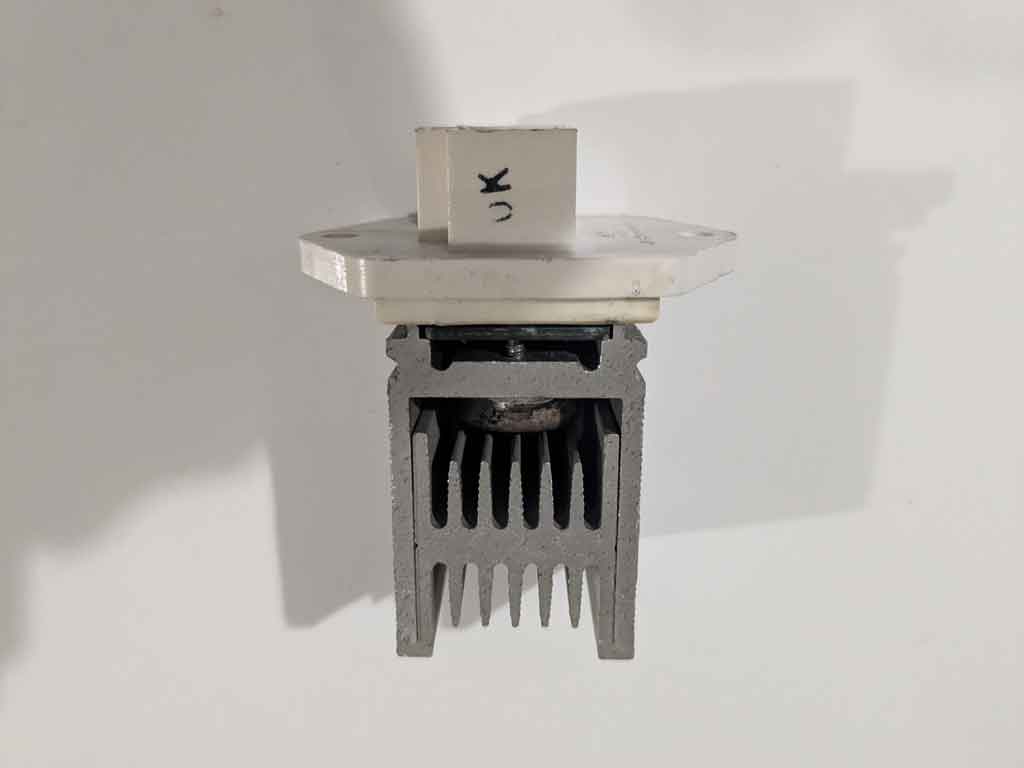
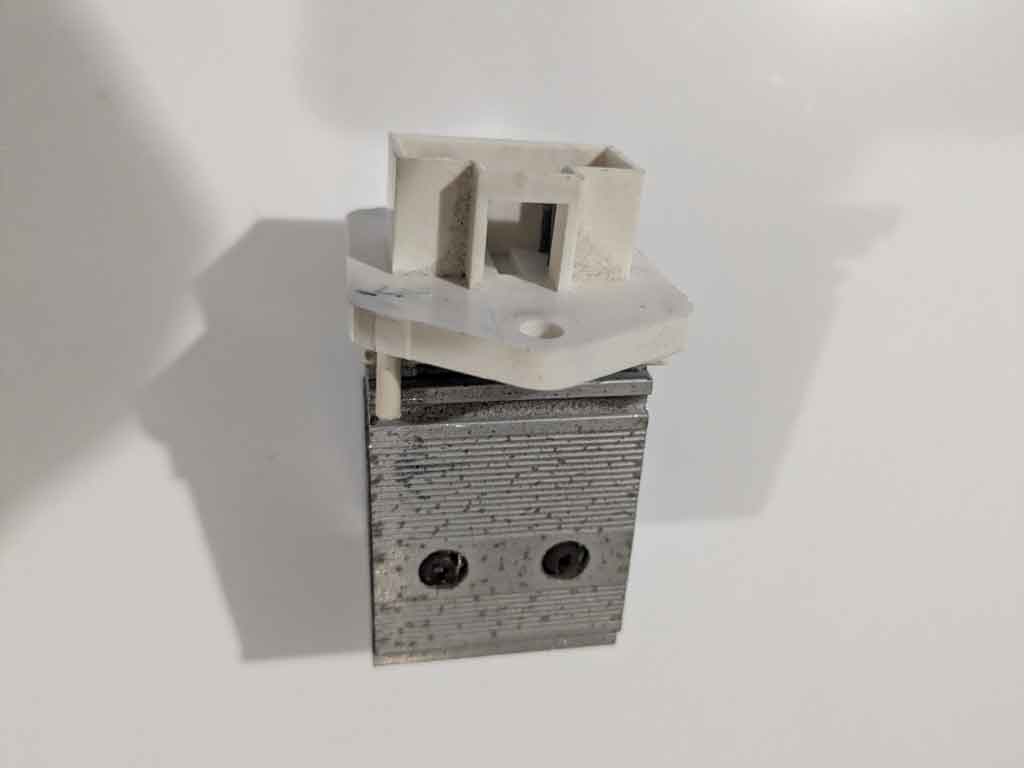
Common faults include the interior fan not working at all, not working except at the highest speed, or the fan running flat out even with the key out.
Before you can test this part you need to get it out. There are probably better instructions online and videos on YouTube, but the basic instructions are as follows:
1. Open the glove box and pull out the plastic piece that acts as the hinge on the right (driver's ) side of the inside of the glove box.
2. The globe box should now come out. You may need to bend in the right hand piece that stops the glove box from opening too far.
3. There are around 15 screws around the outside of the glove box opening. There are two types of screws so remember where they go.
4. The piece on the left side of the glove box will now come off.
5. The horizontal piece underneath the glove box area is held on by a couple of clips and can pull off downwards.
6. The plastic on the side of the centre console can be maneuvered downwards and out of the way.
7. The amplifier is located behind the glovebox opening on the right side. You should be able to see the electrical plug and the white part of it.
8. You now have access to one of the two screws that holds on the amplifier -- the lower one. Unscrew that.
9. Now pull out the plastic piece that forms the back of the glovebox opening.
10. The amplifier can be unplugged and the top screw removed and then it can be maneuvered out.
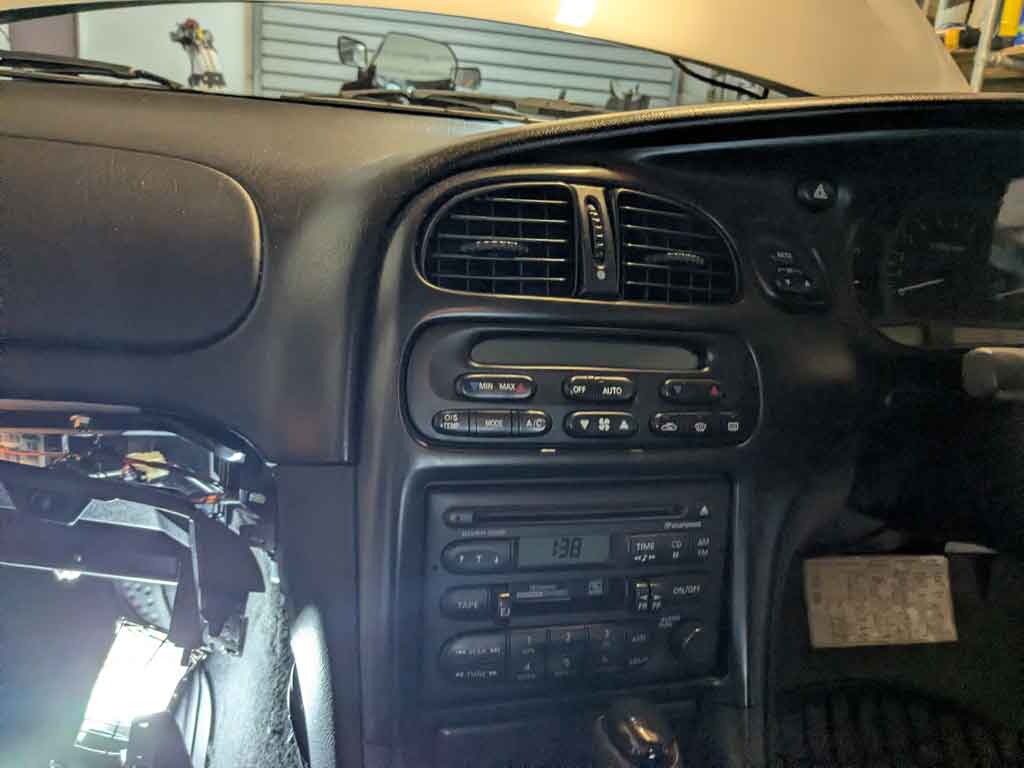
Once you have the amplifier out, confirm that it looks the same as my photos otherwise this advice won't be of help to you.
You are likely to have one of two problems (or both): bad solder joints or a bad transistor.
If you have a multimeter you can test the transistor. Set it to continuity mode where it beeps when the probes touch each other. This is a very basic test but usually enough to identify a bad transistor. On the side of the electrical connector with the two pins, touch the leads on these two pins. It doesn't matter which is positive and which is negative. If you hear a beep then your transistor is faulty.
To check for bad solder joints you need to pull the amplifier apart. The white plastic part is clipped to the metal heatsink. You need to unclip both sides -- a small flat screwdriver can lever it out on both sides. See my photo. Make note of which way it was attached.
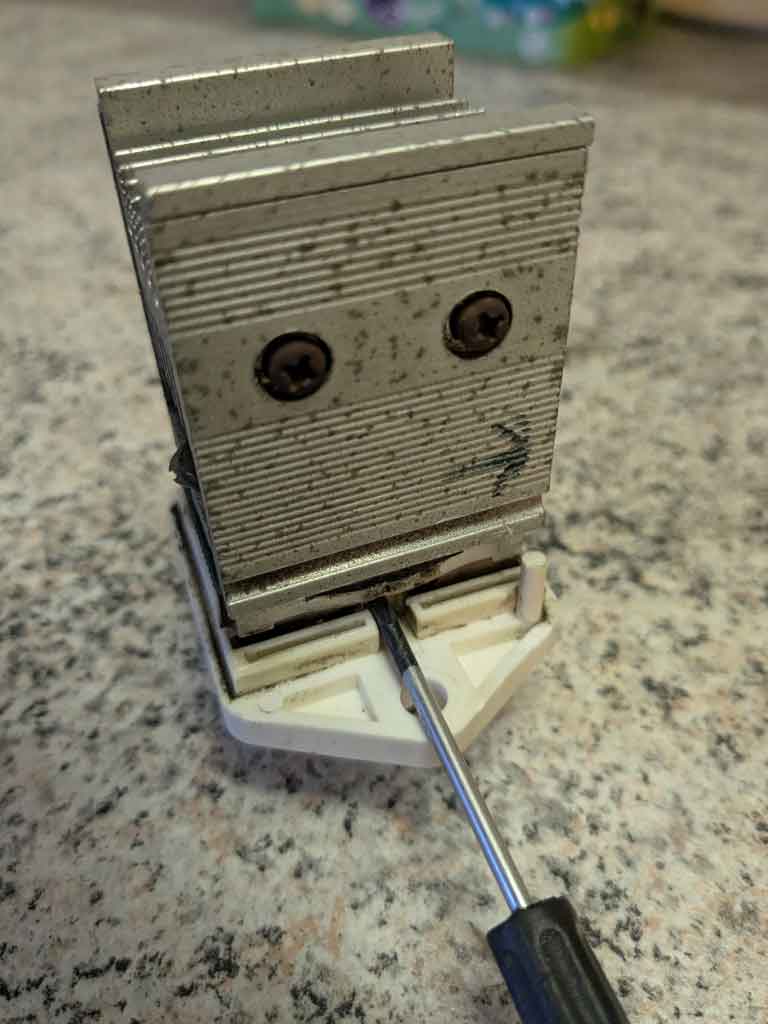
Now you can see the circuit board and you will more than likely see that some of the solder joints look not so good due to years of heat and usage. The two transistor pins are the most likely ones to need work.
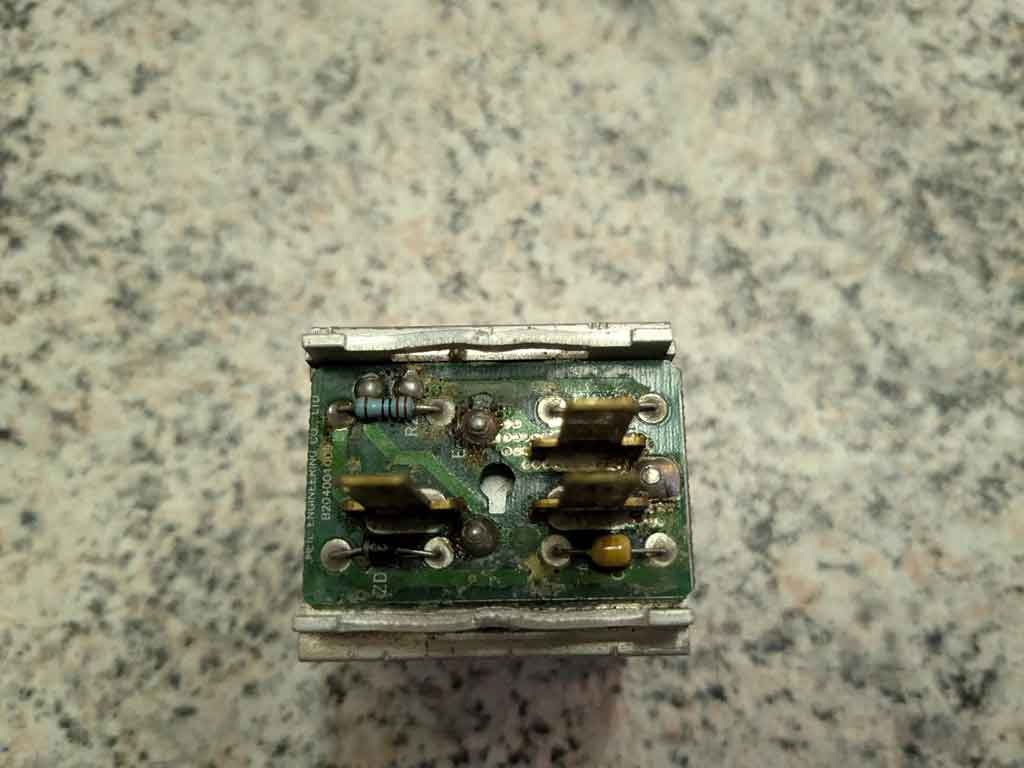
These amplifiers are usually at least $50 second hand, or you can but after market new ones for $120 or much more. The new ones look different and I have no experience with them. You should also be able to repair yours inexpensively if you have a soldering iron and some time.
If your transistor measured okay then you can resolder any suspicious solder joints. You may find that it's not so easy to resolder unless you use a lot of heat, add some fresh solder and flux if you have it.
If your transistor is bad then you have a choice to make. Replace the transistor or replace the whole amplifier. If you buy a transistor locally you may need to spend $20 or $30 or more for a new transistor and you will probably need a new insulator pad as it will likely tear apart when the transistor is removed. If you can wait two weeks you can buy a couple of transistors and lots of insulators on Aliexpress.com for less than $10.
To replace the transistor you will need to do some more disassembly. First unscrew the two screws on each side of the heatsink and remove the centre heatsink part. Then you can unscrew the transistor from the top and then desolder and remove it. Note that early models use one of the screws to electrically connect the top of the transistor to the circuit board and later models have a extra copper piece for this purpose. For early models you need to resolder the screw to the board (requires lots of heat).
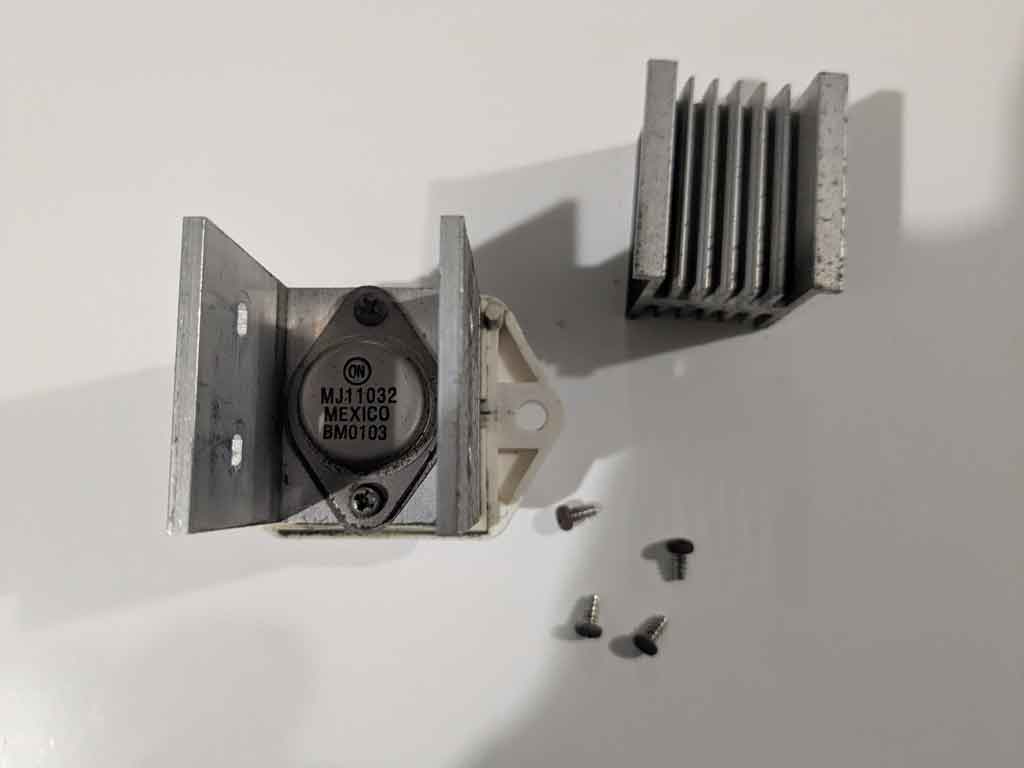
Part numbers you might need:
• The original Holden part number is 92162703 (may vary)
• They are sometimes labelled 06-1373 or 06-21373 (may vary)
• The transistor is MJ11032 or MJ11032G, TO-3 package
• The insulator pad is a TO-3 type, usually silicon or mica


Comments